Stephan Mairesse
Dog Trainer & Behaviorist

Articles

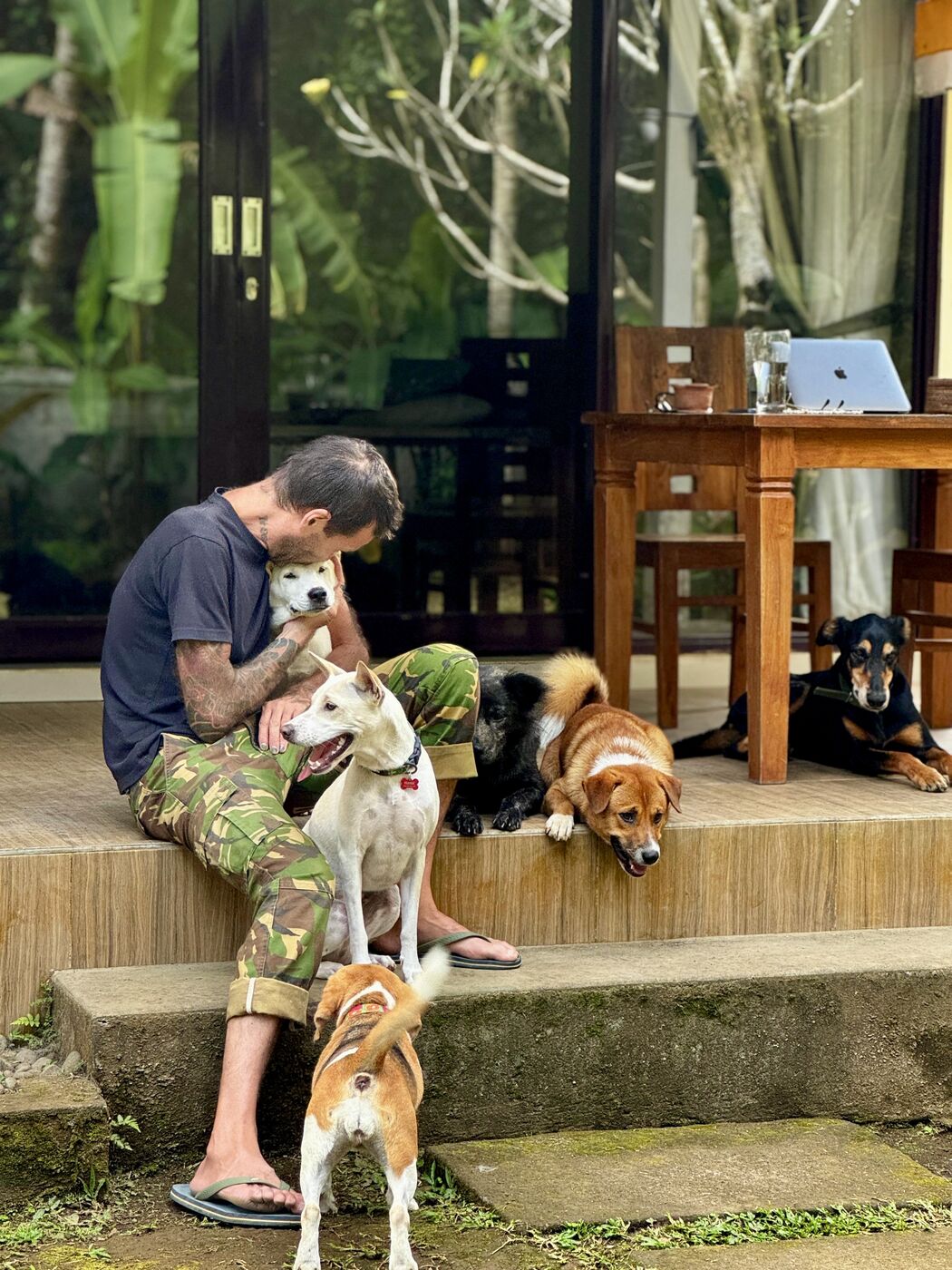
Stephan Mairesse sitting on a porch surrounded by five dogs

Reactivity in Dogs: What It Really Is, and How to Solve It Fast

Reactivity isn't a diagnosis: it's a dog stuck in high arousal because nobody controls him. Why treat-based methods only promise results "over time" — and how leadership and real obedience calm reactive dogs in minutes, on video.

Reactivity isn't a diagnosis: it's a dog stuck in high arousal because nobody controls him. Why treat-based methods only promise results "over time" — and how leadership and real obedience calm reactive dogs in minutes, on video.

Read the article →

Resource Guarding in Dogs: Why the Label Misses the Real Cause

Resource guarding is aggression: a dog defending food, a space, or a person because he believes he outranks you. Why treating it one context at a time fails — and why fixing hierarchical status solves it globally.

Resource guarding is aggression: a dog defending food, a space, or a person because he believes he outranks you. Why treating it one context at a time fails — and why fixing hierarchical status solves it globally.

Read the article →

No consequence, no obedience — what about positive reinforcement?

Thirty years of using positive reinforcement, and why it alone still isn't enough: without some discomfort attached to disobedience, a dog has no real reason to obey.

Thirty years of using positive reinforcement, and why it alone still isn't enough: without some discomfort attached to disobedience, a dog has no real reason to obey.

Read the article →

The establishment of a hierarchy between individuals of different packs

Four years observing Bali's free-roaming packs, on top of dog packs studied across a dozen countries, reveal something rarely documented: a hierarchy also forms between individuals from different packs when they meet regularly.

Four years observing Bali's free-roaming packs, on top of dog packs studied across a dozen countries, reveal something rarely documented: a hierarchy also forms between individuals from different packs when they meet regularly.

Read the article →

1000 times a day in the United States, a dog sends its owner to the emergency room

NEISS-AIP hospital data on dog bites, and why more than 80% of them happen at home — inflicted on family members and those closest to them.

NEISS-AIP hospital data on dog bites, and why more than 80% of them happen at home — inflicted on family members and those closest to them.

Read the article →

When the dog no longer follows its owner

Boarded dogs who refused to go home with their own owners — a firsthand illustration of why dogs are wired to follow whoever actually leads, not just whoever loves them.

Boarded dogs who refused to go home with their own owners — a firsthand illustration of why dogs are wired to follow whoever actually leads, not just whoever loves them.

Read the article →

Letter to dogs

An open letter to the species closest to us — first domesticated, still helping us hunt, guard, detect, and rescue — asking what we've done to deserve it.

An open letter to the species closest to us — first domesticated, still helping us hunt, guard, detect, and rescue — asking what we've done to deserve it.

Read the article →

Cesar Millan and energy

Why Cesar Millan's “energy” — Intention × Emotion — isn't what makes a leader: it's consistent, predictable rules, held regardless of mood, that a dog actually respects.

Why Cesar Millan's “energy” — Intention × Emotion — isn't what makes a leader: it's consistent, predictable rules, held regardless of mood, that a dog actually respects.

Read the article →

Bali, the island of authentic dogs

Why do Bali's free-roaming dogs — living right alongside families — flinch from every hand that reaches for them? A trail that leads back to the earliest days of domestication, and what these “prototype” dogs reveal about the breed's astonishing adaptability.

Why do Bali's free-roaming dogs — living right alongside families — flinch from every hand that reaches for them? A trail that leads back to the earliest days of domestication, and what these “prototype” dogs reveal about the breed's astonishing adaptability.

Read the article →

Is a dog's temperament determined by its breed?

Why breed explains far less about a dog's character than people assume — and what actually does, according to Patrick Pageat and 30 years of practice.

Why breed explains far less about a dog's character than people assume — and what actually does, according to Patrick Pageat and 30 years of practice.

Read the article →

Rules of life and obedience are basic and fundamental needs

Without a job to do, a companion dog still needs its brain stimulated — or it develops the compulsive behaviors seen in under-stimulated zoo animals.

Without a job to do, a companion dog still needs its brain stimulated — or it develops the compulsive behaviors seen in under-stimulated zoo animals.

Read the article →

The dog and the human attachment

How a puppy's attachment shifts from its mother to a family member — and why a dog is ultimately “faithful” to whoever holds the dominant position.

How a puppy's attachment shifts from its mother to a family member — and why a dog is ultimately “faithful” to whoever holds the dominant position.

Read the article →

Dog training and preconceived ideas

Six common assumptions about dog ownership — from “never punish with your hand” to “self-regulated feeding” — examined and corrected.

Six common assumptions about dog ownership — from “never punish with your hand” to “self-regulated feeding” — examined and corrected.

Read the article →

Choosing a breeder

What to check before bringing a puppy home: hereditary screening, and why the breeder's socialization work matters as much as the pedigree.

What to check before bringing a puppy home: hereditary screening, and why the breeder's socialization work matters as much as the pedigree.

Read the article →

Dogs and the hierarchy

What Monique Bourdin, one of France's leading behavioral veterinarians, and Patrick Pageat, a European leader in the field, say about hierarchy and canine wellbeing.
What Monique Bourdin, one of France's leading behavioral veterinarians, and Patrick Pageat, a European leader in the field, say about hierarchy and canine wellbeing.

Read the article →

Pierre Jouventin: the dog and the hierarchy

A CNRS ethologist on why refusing the pack-leader role leaves a dog — a wolf “around the edges” — to take it instead.

A CNRS ethologist on why refusing the pack-leader role leaves a dog — a wolf “around the edges” — to take it instead.

Read the article →

Aggression in dogs

A deep, practical breakdown of why dogs bite, who's most at risk, and how dominance, obedience, and breeding conditions prevent it.

A deep, practical breakdown of why dogs bite, who's most at risk, and how dominance, obedience, and breeding conditions prevent it.

Read the article →

Raising sociable, balanced puppies — Part 2

The socialization window in detail: sensory imprinting, intra- and inter-species learning, and how to work through it properly.

The socialization window in detail: sensory imprinting, intra- and inter-species learning, and how to work through it properly.

Read the article →

Raising sociable, balanced puppies — Part 1

What happens at the breeder in the first three months, and why it matters more than anything an owner does afterward.

What happens at the breeder in the first three months, and why it matters more than anything an owner does afterward.

Read the article →

A puppy's first nights at home

Why the first week matters, why a brief spell sleeping in the bedroom is fine, and what not to do when a puppy cries at night.

Why the first week matters, why a brief spell sleeping in the bedroom is fine, and what not to do when a puppy cries at night.

Read the article →

The development of the puppy: impregnation and socialization

The three-week-to-three-month window that shapes a dog's temperament for life, and why it conditions everything that follows.

The three-week-to-three-month window that shapes a dog's temperament for life, and why it conditions everything that follows.

Read the article →